
Catholic Social Teaching (CST) is the Catholic Church’s roadmap for building a fairer, more compassionate world. Informed by Scripture and papal writings, CST provides our students and staff with a clear moral compass – inspiring us to uphold human dignity, act with justice and cherish the world around us.
Catholic Social Teaching Principles
- The Common Good: We speak clearly and show respect and responsibility for our sisters and brothers who are in need. We are called to work for the good of each and all.
- Participation: We know that we are all ‘Co Workers’ and have the right and duty to participate fully in family life and society. Through cooperation we can learn and grow closer to God.
- Subsidiarity: We learn about responsibilities and rights and we respect the views of others. We act with courage and determination to empower everyone to have a say.
- Preferential Option for the Poor: We believe that all resources on earth should be shared with everyone. We show kindness and compassion to others and put the needs of the poor and vulnerable first.
- Stewardship of God’s Creation: We believe that the earth is our common home and that we should use its resources wisely. It is our Christian vocation to care for creation, live sustainably and enhance the wellbeing of our planet.
- Solidarity: God created us as one global family, called to support our brothers and sisters. We are encouraged to ask ‘who is our neighbour?’ and think how we can serve the local, national and global communities of which we are a part.
- Human Dignity: We believe that we are beautifully made in the image and likeness of God and that each one of us is unique. We are called to treat every person with loving respect.
Catholic Social Teaching in Our Curriculum
At our school, Catholic Social Teaching isn’t just a topic we teach in RE – it’s part of everything we do.
Across every subject, our students explore real-world big questions through the lens of Catholic ethics. Each half term, classes tackle a dedicated “CST Big Question” that connects their everyday lessons to global issues, helping them build empathy, think critically, and grow into compassionate global citizens.
Take a look at our curriculum maps below to see the CST Big Questions:
Celebrating Faith in Action: Our CST Rewards
We believe that living out Catholic Social Teaching is just as important as academic achievement. To celebrate this, our school reward system is built directly around CST principles!
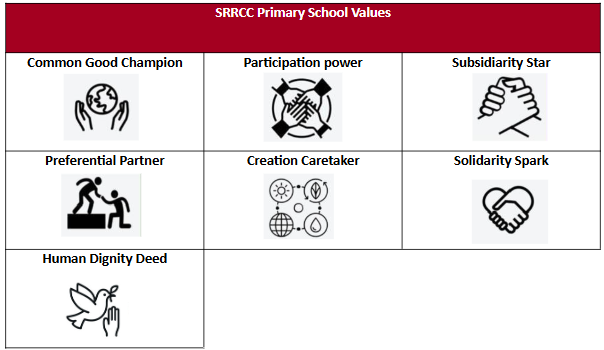
Students earn CST Points for putting their faith into practice. For example, pupils are named a Common Good Champion when they demonstrate respect to others, helping to create a welcoming and loving community for everyone. It’s our way of encouraging every child to let their light shine and put Catholic values into action every day.
Living out our Faith
Our Fundraising & Community Outreach
Putting faith into action is a cornerstone of our school life. Throughout the academic year, our students, staff, and families regularly engage in charitable initiatives to support local, national, and international causes—including food banks, homelessness shelters, and global relief organizations like CAFOD and Caritas. From seasonal appeals to student-led fundraisers, we empower our young people to see fundraising not merely as giving money, but as an act of solidarity and love for our neighbors.
Laudato Si’ & Care for Our Common Home
Inspired by Pope Francis’s encyclical Laudato Si’, our school is deeply committed to ecological justice and environmental stewardship. We actively care for our common home by integrating sustainable practices into daily school life – reducing waste, promoting recycling, conserving energy and maintaining green spaces around our grounds. Our students learn that caring for the environment is an integral part of living out their faith and ensuring a sustainable future for all.
Our Chaplaincy Team
Our Chaplaincy Team plays a vital role in animating the Catholic ethos and social mission of our school. Led by staff and student ambassadors, the team provides spiritual guidance, organises liturgies, leads prayer life and coordinates social justice projects. They inspire the entire school community to put Catholic Social Teaching into practice, serving as a compassionate support network and helping every student discover how they can be a force for good in the world.